Skip to content
Canadian edition
The End of Life PlannerCanada

General information for families in Canada, outside Quebec. It is not legal advice about your own situation.

Canada · Planning ahead

Death binder for Canada: what goes in it

A death binder is one folder, filled in while you are alive, that tells the person who settles your estate who you are, where your will and papers are, what you own and owe, and what you would like done, so that they are not left searching.

This page does not cover Quebec. Its law is different, and nothing here should be used to plan for an estate there.

Facts read at official sources · November 12, 2026

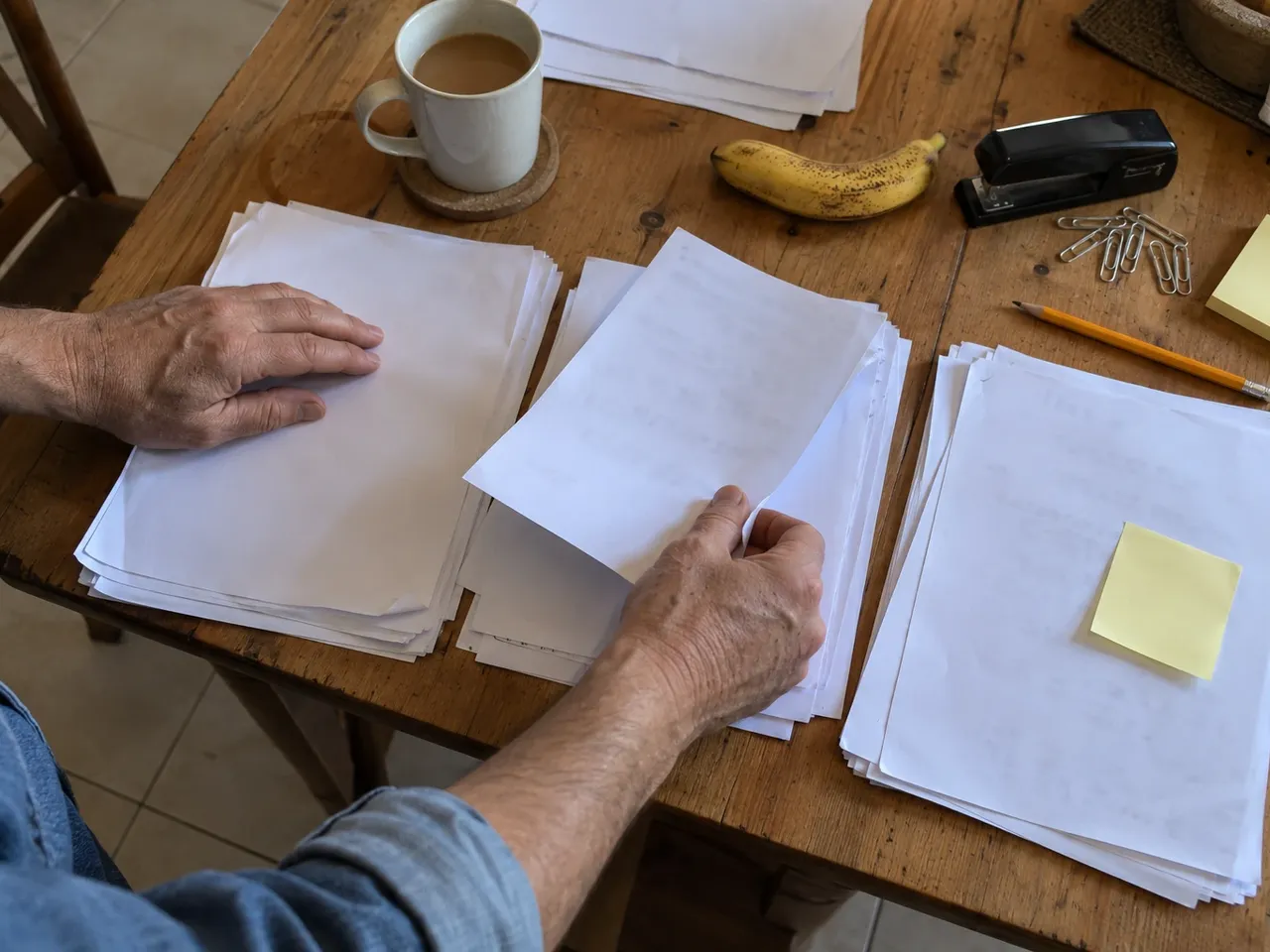
Hands sorting stacks of papers on a kitchen table

A death binder, in five lines

Some people call it an end-of-life binder or an estate binder. It is the same thing: a plain record, kept in one place, for the people who will act for you.

  • It is a record of facts: names, account holders, policy numbers, and where each paper is kept.
  • It is not a will, and it does not replace one.
  • It points to the will, the powers of attorney and the deeds. It does not copy out their wording.
  • It never holds a password. It says where the password list is kept.
  • It is dated, and it is read again whenever something in your life changes.

Part one

Who and where

The first pages answer the questions that come in the first days: who are you on paper, who should be told, and where is the will.

About you: the personal records

Who
You fill it in. Your executor and your family will use it.
When
Once, then whenever a document is renewed or replaced

Almost every form after a death asks for the same few details. Written down once, they do not have to be hunted for.

The Social Insurance Number

If a death occurs in a Canadian province, the provincial vital statistics agency will automatically notify the SIN program. The federal page says nothing more needs doing about the number itself.

Your executor will still be asked for the number on pension and tax forms. Say where the card or letter is kept.

The passport

If a passport is still valid when its holder dies, the federal page says it should be mailed to Passport Program Gatineau QC K1A 0G3, Canada.

So the binder says where the passport is, and when it runs out.

Papers that prove a relationship

In Alberta, a relative who orders a death certificate must attach proof of the relationship, and for an executor Alberta says the applicant must be named in the will, or a similar document.

Birth and marriage certificates are the usual proof of who is related to whom. Say where yours are.

  • Your full legal name, exactly as it appears on your birth certificate or passport.
  • Any other name you have used: a birth name, a married name, a short form.
  • Your date and place of birth.
  • Your home address, and how long you have lived there.
  • Where your Social Insurance Number card or letter is kept.
  • Your provincial health card: where it is kept.
  • Your passport: where it is, and the date it runs out.
  • Your driver's licence: where it is kept.
  • Your birth certificate: where the original is.
  • Marriage certificate, separation agreement or divorce order: where each one is.
  • Citizenship or immigration papers, if you have them.
  • Military service records, and any veterans' benefits you receive.
  • Your employer, or your last one, with a name to contact.
  • Your family doctor, and the clinic's name.

Official source

Your family, and your partner's position

Who
You fill it in. Your executor and a lawyer will use it.
When
Once, then after any marriage, separation, birth or death in the family

Who counts as a spouse is not the same in every province, or for every benefit. Clear dates save an executor weeks of asking.

For the federal pension

The Canada Pension Plan survivor's pension is a monthly payment paid to the legal spouse or common-law partner of a contributor who has died.

For the CPP, a common-law partner is a person who lived with the contributor in a conjugal relationship for at least 1 year.

So the date you began living together is worth writing down.

Province by province

The provinces use their own tests, and they differ. The section further down this page, on what changes by province, sets out what Ontario, British Columbia and Alberta each say.

The binder does not decide any of this. It records the dates and the facts a lawyer would ask for.

  • Your spouse or partner: full name, date of birth, and how to reach them.
  • Whether you are married, living together, separated or divorced.
  • The date you married, and where.
  • The date you began living together, if you are not married.
  • The date of any separation, and where the agreement or order is kept.
  • Any earlier marriage or partnership, with dates.
  • Each child: full name, date of birth, address and telephone number.
  • Children from an earlier relationship, and stepchildren, listed by name.
  • Grandchildren, by name, under the parent they belong to.
  • Your parents, brothers and sisters, if living, and how to reach them.
  • Anyone who depends on you for money or care.
  • A plain family tree on one page.

Official source

The people to contact

Who
You fill it in. Whoever is first on the scene will use it.
When
Once, then once a year

One page of names and numbers is the most used page in any binder.

The executor, by each province's name

The person who settles an estate has a different name in each province, and the court's document does too.

In Ontario the court issues a Certificate of Appointment of Estate Trustee, so Ontario's papers call an executor an estate trustee.

In British Columbia the court's document is a representation grant.

In Alberta the Act speaks of a personal representative, and the court issues a Grant of Probate or Grant of Administration.

  • The executor your will names: full name, address, telephone and email.
  • The back-up executor your will names.
  • Whether each of them knows they are named, and has agreed.
  • Your lawyer, and the firm's name.
  • Your accountant or tax preparer.
  • Your financial adviser or investment firm.
  • Your insurance broker or agent.
  • The people to tell first: close family and close friends.
  • A faith leader or celebrant, if you would like one told.
  • A neighbour or friend who holds a key.
  • Who should take the pets, and whether they have agreed.
  • Clubs, associations and volunteer groups to be told.

Official source

The will, and where it is

Who
You fill it in. Your executor needs it before anything else.
When
The day the will is signed, and again if it is ever replaced or moved

The will names the executor, so the original has to be found first. The binder says where it is. It does not repeat what it says.

A handwritten will, in Ontario and Alberta

In Ontario, the Act says a person may make a valid will wholly by his or her own handwriting and signature, with no witness.

In Alberta, the Act says a will may be made by a writing that is wholly in the testator's own handwriting and signed, with no witness.

A formal will is witnessed. In Ontario it is signed in front of two or more attesting witnesses present at the same time. In Alberta the will-maker signs in the presence of 2 witnesses who are both present at the same time.

In British Columbia

British Columbia's Act has no separate rule for a handwritten, unwitnessed will. It says a will must be in writing, signed at its end, and witnessed.

The Act then says: “A will that does not comply with subsection (1) is invalid”, unless the court orders it to be effective or another section of the Act recognizes it.

British Columbia's wills notice

In British Columbia, when a person makes a will, a notice of will may be filed with the registrar general. Registering one costs $17.

The notice says where the will is. Vital Statistics does not keep a copy of your will or record any information about its contents.

British Columbia says completing a search for a wills notice is a requirement of the wills probate process. So in British Columbia the binder records whether a notice was filed, and when.

Wishes about who gets what

Because a handwritten, signed page can be a will in Ontario and Alberta, a note in a binder about who should have what could be read as a will, or as a change to one.

Courts in all three provinces can also be asked to treat an imperfect paper as a will. That is the court's decision, and it is slow and uncertain.

Keep the binder to facts. Take wishes about who gets what to a lawyer, so they go into the will itself.

  • Whether you have a will.
  • The date the will was signed.
  • Where the original is kept: the room, the drawer, the safe, or the law firm.
  • The lawyer or firm that drew it up, if one did.
  • Whether the will is typed and witnessed, or in your own handwriting.
  • Where any later paper that changes the will is kept.
  • Where copies are kept, marked clearly as copies.
  • The executor and the back-up executor it names.
  • In British Columbia: whether a wills notice was filed, and the date.
  • In British Columbia: the location the wills notice gives for the will.
  • Any earlier will, and whether it has been destroyed.
  • A reminder to your family not to write on the will or take out its staples.

Official source

Where the papers and the keys are

Who
You fill it in. Your family will use it in the first week.
When
Once, then whenever something is moved

A binder cannot hold every paper. What it can do is say, for each one, exactly where to look.

An accessible parking permit, in Ontario

In Ontario, an accessible parking permit that belonged to a person who has died must be returned to ServiceOntario within 30 days.

If you hold one, say so, and say where it is kept.

  • Where the binder itself is kept, and who has been told.
  • The filing cabinet, desk or box where household papers are kept.
  • A home safe: where it is, and who knows how to open it.
  • A safety deposit box: the bank, the branch, and where the key is.
  • Who else is named on the safety deposit box.
  • House keys: how many sets, and who holds each one.
  • Car keys, and any spare.
  • Keys to a shed, a garage, a storage unit or a cottage.
  • The alarm company's name, and who holds the code.
  • Where the mail is delivered, and any post office box.
  • In Ontario: whether you hold an accessible parking permit, and where it is.
  • Papers held by someone else: a lawyer, an accountant, a relative.

Official source

Part two

Money and property

An executor's first real task is to find out what there is. Every line here is one fewer letter they have to write to find out.

Bank accounts

Who
You fill it in. Your executor will use it.
When
Once, then whenever an account is opened or closed

An executor can only write to the banks they know about. A list of every account is the most useful page in this part.

Joint accounts

The Financial Consumer Agency of Canada says that in some provinces and territories, banks may temporarily restrict access to some or all funds in a joint account after a death.

So the binder marks each account as held alone or held jointly, and with whom.

Accounts in one name

Ontario says that if a person owned real property or assets held by a financial institution, the estate normally must be probated.

Each bank decides what it needs to see. Knowing which accounts are in one name tells the executor where to ask first.

  • Each bank or credit union: its name and the branch you use.
  • Each account: the kind of account and the name it is held in.
  • Whether each account is held alone or jointly, and with whom.
  • Where the statements are kept, on paper or online.
  • Regular payments coming in: a pension, wages, rent.
  • Regular payments going out: the mortgage, utilities, insurance.
  • Accounts at online-only banks, which leave no paper trail at home.
  • Savings bonds, term deposits and guaranteed investment certificates, with the issuer.
  • Any account held in another country.
  • Where the bank cards and the cheque book are kept.
  • Cash kept at home, and where.

Official source

Pensions and government benefits

Who
You fill it in. Your executor and your surviving partner will use it.
When
Once, then when a pension starts or changes

Two federal payments stop at a death and one can be claimed. Each needs details that only you can write down ahead of time.

The CPP death benefit

The Canada Pension Plan pays a death benefit for an eligible contributor. Service Canada says the most it pays is $5,000.

Service Canada says the executor should apply within 60 days of the date of death. That is a short window for someone who does not yet know whether you paid into the plan.

Payments that have to stop

The federal page says that if a person received CPP or Old Age Security benefits, these will need to be cancelled as soon as possible.

Benefits are payable for the month in which the death occurs; benefits received after that will have to be repaid.

So the binder says which of these you receive, and which account they are paid into.

The survivor's pension

The CPP survivor's pension is a monthly payment paid to the legal spouse or common-law partner. Your partner applies, not the executor.

  • Whether you have paid into the Canada Pension Plan, and for roughly how long.
  • Whether you receive a CPP retirement pension or a disability benefit now.
  • Whether you receive Old Age Security, or the Guaranteed Income Supplement.
  • The bank account each federal payment goes into.
  • Where your Service Canada letters and statements are kept.
  • Each workplace pension: the employer, the plan's name and the administrator.
  • Whether a workplace pension pays anything to a surviving partner.
  • Registered retirement savings and income funds: the firm that holds each one.
  • Tax-free savings accounts: the firm that holds each one.
  • Who each registered plan names to receive it, and the date you last checked.
  • Any pension from another country, and the office that pays it.
  • Veterans' benefits or other government payments you receive.

Official source

Investments

Who
You fill it in. Your executor will use it.
When
Once, then whenever a holding is opened or moved

Investments are the accounts families most often miss, because the statements may arrive only online.

  • Each investment firm or brokerage, and the adviser's name.
  • Each account: the kind of account and the name it is held in.
  • Whether each account is held alone or jointly.
  • Shares held directly, and where the certificates are.
  • A share plan or stock options from an employer.
  • An interest in a private company or a partnership, and where the agreement is.
  • Money you have lent to someone, and where the written record is.
  • Where the yearly statements are kept.

Tax

Who
You fill it in. Your executor, or their accountant, will use it.
When
Each year, when the return is filed

A last tax return has to be filed after a death, and the person filing it starts from your earlier ones.

The final return

For a death from the start of January to the end of October, the Canada Revenue Agency says the final return is due April 30 of the year following the death. A death later in the year has a later date.

Why the papers matter to your executor

The CRA says that legal representatives who hand out an estate's assets without a clearance certificate are personally liable for unpaid amounts, up to the value of what they handed out. The form that asks for the certificate is TX19.

An executor who can find your returns and notices can show the tax has been dealt with. One who cannot is left guessing.

  • Where your last several tax returns are kept.
  • Where the notices of assessment for those years are kept.
  • Your accountant or tax preparer, and how to reach them.
  • Whether you file on paper or online, and with which software or service.
  • Whether every past year's return has been filed.
  • Any amount you owe the Canada Revenue Agency, or are paying by instalments.
  • Where this year's tax slips are collected as they arrive.
  • Records of what you paid for investments and property, for working out gains.
  • Any business or rental income, and where its records are.
  • Property or accounts held outside Canada that you report.

Official source

The home and other property

Who
You fill it in. Your executor will use it.
When
Once, then after any purchase, sale or change in how something is owned

How a thing is owned matters as much as what it is. The binder records both.

Owned alone, or owned jointly

In Ontario, the value on which the estate's tax is worked out leaves out assets held in joint ownership that automatically become the other owner's.

Each province has its own rules. In every one, the executor's first question about the home is whose name is on the title, and how.

The list an executor has to make

In Alberta, the first core task the Act gives a personal representative is to identify the estate's assets and liabilities.

This part of the binder is that list, started by the one person who knows it all.

  • Your home: the address, and the names on the title.
  • Whether the home is owned alone or jointly, and with whom.
  • Where the deed or the title papers are kept.
  • If you rent: the landlord, and where the lease is.
  • A cottage, a second home, land or a rental property, with the same details.
  • A timeshare, a burial plot or a storage unit.
  • The property tax account for each property.
  • Each vehicle: make, model and year, and where the ownership papers are.
  • A boat, a trailer or a recreational vehicle.
  • Valuables: jewellery, art, instruments, collections, tools, and where each is kept.
  • Any valuation or appraisal, and its date.
  • Things you are holding that belong to someone else.
  • Things of yours that someone else is holding.

Official source

Insurance

Who
You fill it in. Your executor and the people the policies name will use it.
When
Once, then at each renewal

An insurer pays only when someone tells it. A policy nobody knows about may never be claimed.

  • Each life insurance policy: the insurer, and where the policy paper is.
  • Who each life policy names to receive the money, and the date you last checked.
  • Life cover through an employer, a union or an association.
  • Life cover attached to a mortgage, a loan or a credit card.
  • Home or tenant's insurance: the insurer and the renewal date.
  • Car insurance: the insurer and the renewal date.
  • Health, dental or travel cover, and who else it covers.
  • Critical illness, disability or long-term care cover.
  • Your broker or agent, and how to reach them.
  • Where the policy papers are kept.

Debts and regular bills

Who
You fill it in. Your executor will use it.
When
Once, then once a year

What you owe is part of the estate too. An honest list protects the person who has to pay it from the estate.

The credit bureaus

The federal page tells the people settling an estate to notify the two credit reporting agencies in Canada of the death: Equifax and TransUnion.

A list of every card and loan lets your executor check the credit file against it, and spot anything that is not yours.

  • The mortgage: the lender, and where the papers are.
  • A line of credit, and what it is secured against.
  • Each credit card: the issuer and the name on the card.
  • Car loans and leases.
  • Student loans and personal loans.
  • Money owed to a relative or a friend, and where it is written down.
  • Any loan you have guaranteed or co-signed for someone else.
  • Utilities: electricity, gas, water, and the name on each account.
  • Telephone, internet and television providers.
  • Subscriptions and memberships that renew by themselves.
  • Charities you give to by regular payment.
  • Which account or card each bill is paid from.

Official source

What changes by province

The binder is the same folder everywhere. Four of the facts behind it are not.

A handwritten will: Ontario and Alberta, but not British Columbia

In Ontario, the Act says a person may make a valid will wholly by his or her own handwriting and signature, with no witness. Ontario's own guide lists it among the ways to make a will: writing a handwritten will, called a holograph will.

In Alberta, the Act says a will may be made by a writing that is wholly in the testator's own handwriting and signed, with no witness.

British Columbia's Act has no such rule. It says: “A will that does not comply with subsection (1) is invalid”, unless the court orders it to be effective or another section recognizes it.

For the binder, the point is practical. Say what kind of will you have and where it is. If you have moved between provinces since you made it, ask a lawyer whether it still stands.

Official source

British Columbia has a wills notice, and the executor must search for it

In British Columbia, when a person makes a will, a notice of will may be filed with the registrar general. It costs $17 to register one.

Vital Statistics does not keep a copy of your will or record any information about its contents. The notice only says that a will exists and where it is.

British Columbia says completing a search for a wills notice is a requirement of the wills probate process. The executor must include the results of that search with the application for probate.

So a British Columbia binder has one extra line: whether a notice was filed, on what date, and the location it gives.

Official source

Who may order a death certificate

Ontario says there are no restrictions on who can apply for a death certificate. Its regular online service costs $15.

In British Columbia the page is as short: Any person can apply for a death certificate. By mail it costs $27.

Alberta is stricter. An executor may order one, but the applicant must be named in the will, or a similar document. A relative must attach proof of the relationship.

Alberta's government fee is $20 for each document, and the application goes through a registry agent. Alberta's page says: “Applications sent directly to Vital Statistics will not be processed”.

So in Alberta the binder matters sooner. It tells the executor where the will is, and tells the family where the birth and marriage certificates are.

Official source

A partner you are not married to

In Ontario, where there is no will, the Act gives shares to a spouse. For those shares, spouse has the same meaning as in section 1 of the Family Law Act, and that section means two people who are married to each other. The part of the Act about support uses a wider meaning.

In British Columbia, two people are spouses under the Act if they were married to each other, or had lived with each other in a marriage-like relationship for at least the period the Act sets.

In Alberta, the Act's rules for an estate with no will name an adult interdependent partner beside a spouse. This page does not say who counts as one.

Federal benefits use their own test. For the CPP survivor's pension, a common-law partner is one who lived with the contributor for at least 1 year.

The binder cannot change any of this. A will can, and that is a conversation for a lawyer in your province. What the binder does is record the dates.

Official source

Part three

Wishes and the digital life

These pages hold what no bank or government office could tell your family: what you would like, and how to get into what you leave behind.

Funeral wishes

Who
You fill it in. Your family will use it in the first days.
When
Once, then whenever your wishes change

The funeral is arranged within days, often before anyone has read the will. Wishes written in the binder are found in time.

What the family is given, in Ontario

In Ontario, the funeral director usually sees the death registered, and will issue copies of proof of death that the family can use in certain situations.

Ontario's guide also says a family member can also register the death without using a funeral service provider.

A burial or cremation waits on that registration. Ontario's guide puts it in one line: “You must register a death before a burial permit can be issued”.

  • Burial, cremation or another choice.
  • A funeral home you would like used, if you have one in mind.
  • Any prepaid funeral contract: the provider, and where the contract is.
  • A cemetery plot or niche you own, and where the deed is.
  • The kind of service: religious, non-religious, or none.
  • Where you would like the service held.
  • Who you would like to lead it, and who might speak.
  • Music, readings or hymns you would like.
  • Where you would like ashes kept or scattered.
  • Flowers, or a charity for donations in your memory.
  • Details for an obituary: places lived, work, family names.
  • People who must be told in time to attend.
  • Anything you do not want.
  • Whether you have registered as an organ and tissue donor.

Official source

Powers of attorney and health wishes

Who
You fill it in. The people you have named will use it while you are alive.
When
The day each document is signed, and again if one is replaced

A will speaks after a death. These papers are for the time before it, if you cannot decide for yourself. The binder says which you have and where each one is.

In Ontario

Ontario has two documents: a continuing power of attorney for property, and a power of attorney for personal care. The person each one names is called an attorney. It does not mean a lawyer.

Ontario says a person must be at least 16 years old to make a personal care power of attorney. The age for a power of attorney for property is higher.

The Act lists when a continuing power of attorney for property ends. One line of that list is when the grantor dies.

In British Columbia

British Columbia's law lists when an enduring power of attorney ends, and one line of the list is the death of the adult who made it.

A representation agreement in British Columbia has its own list, and it also ends on the death of the adult who made it.

What that means for the binder

Ontario's power of attorney for property and British Columbia's two papers end at death, and the will takes over. So the binder keeps them apart from the will, and tells the people named in each where to find it.

This page states nothing about Alberta's documents. We have not read an official page for them.

  • Whether you have a power of attorney for property or money.
  • The person it names, and any back-up.
  • Whether you have a document for health and personal care decisions.
  • The person it names, and any back-up.
  • The date each document was signed.
  • Where each original is kept.
  • Who holds copies: the people named, your doctor, your bank.
  • Whether the people named know, and have agreed.
  • The lawyer or firm that drew them up, if one did.
  • Where any written wishes about your care are kept.
  • Your family doctor, specialists, and your pharmacy.
  • A current list of your medicines, or where one is kept.

Official source

Online accounts

Who
You fill it in. Your executor will use it.
When
Once, then once a year

Much of a life now leaves no paper at all. If the account is not on a list, your executor may never learn it exists.

Part of the executor's list

In Alberta, the list a personal representative compiles of a person's property and debts includes online accounts, named in the Act's own Schedule.

Wherever you live, the practical point is the same: write down which accounts exist.

Never the passwords

Do not write a password in the binder. A binder is read by many hands, and it may sit on a shelf for years.

Write down that the account exists and where your password list is kept: a password manager, or a sealed envelope in the safe.

  • Each email address you use, and the provider.
  • Where your password list is kept. Not the passwords themselves.
  • Whether you use a password manager, and which one.
  • Online banking and investment sign-ins: which banks and firms, not the passwords.
  • Your Canada Revenue Agency and Service Canada online accounts.
  • Social media accounts, and what you would like done with each.
  • Photo and file storage, and which service holds them.
  • Shopping accounts that hold a card or a balance.
  • Payment services, loyalty points and travel rewards.
  • Any digital currency, the service or wallet that holds it, and where its recovery details are kept.
  • A website, domain name or online business you run.
  • Streaming, software and app subscriptions that renew.
  • Whether an account lets you name someone to manage it after a death, and whom you named.

Official source

Phones, computers and devices

Who
You fill it in. Your family will use it.
When
Whenever you change a phone or a computer

A locked phone can hold the photos, the contacts and the codes that every other account sends. Say how your family is meant to reach them.

  • Your mobile phone: the make, the carrier, and the name on the account.
  • Where the phone's passcode is recorded. Not the passcode itself.
  • Your computer, tablet and any external drives, and where each is kept.
  • Where the sign-in details for each device are recorded.
  • Where your photos are backed up.
  • Which phone number or app receives your sign-in codes.
  • A home telephone line, and its provider.
  • Smart-home devices, cameras and doorbells, and the account behind each.
  • Anything on a device you would like kept, and anything you would like erased.

Pets and the running of the home

Who
You fill it in. Whoever steps in first will use it.
When
Once, then when a routine changes

For the first few days someone has to keep the home going. A single page tells them how.

  • Each pet: its name, age, and the veterinary clinic.
  • Feeding, medicine and routines for each pet.
  • Who has agreed to take each pet.
  • Where the furnace, the water shut-off and the electrical panel are.
  • Who looks after the garden, the snow or the cleaning, and how they are paid.
  • Garbage and recycling days.
  • Deliveries and services that will need to be stopped.
  • Plants or anything else that needs regular care.

The date page

Who
You sign and date it. Everyone who opens the binder reads it first.
When
Every time you change a page, and at least once a year

A binder with no date cannot be trusted. One page at the front says when it was last checked.

When life changes, the will may need to as well

In Ontario, gifts to a spouse in a will are revoked if the spouses are separated at the time of the testator's death. The Act has its own test for what separated means.

In Ontario the section under which a marriage revoked an earlier will has been repealed. In Alberta, a marriage on or after February 1, 2012 does not revoke a will, whenever the will was made.

This page does not say what any of that means for your own will. After a marriage, a separation, a birth or a move to another province, update the binder and ask a lawyer about the will.

  • The date the binder was first filled in.
  • The date of each later review, with your initials.
  • What changed at each review, in a line.
  • Who knows the binder exists.
  • Who knows where it is kept.
  • A reminder to check it after a marriage, a separation, a birth or a death.
  • A reminder to check it after a move, a new account or a new policy.
  • A reminder to check it if you move to another province.
  • A note of the pages that are out of date, until you fix them.

Official source

The official facts behind the binder, with the date we read each one

Each row is taken from the official page it names. Nothing in this table is typed by hand.

The official facts behind the binder, with the date we read each one
WhatThe figure or ruleOfficial source
CPP death benefit: the most it pays$5,000Paid for an eligible contributor. The binder records whether you paid into the plan.Death Benefitread November 12, 2026
CPP death benefit: when the executor applieswithin 60 days of the date of deathA short window. The binder gives the executor your details on the first day.Death Benefitread November 12, 2026
CPP and Old Age Security after a deathbenefits received after that will have to be repaidThe binder records which payments you receive and the account they go into.Cancel Canada Pension Plan and Old Age Security benefits after a deathread November 12, 2026
Joint bank accountsbanks may temporarily restrict accessThe binder marks each account as held alone or jointly.Joint bank accountsread November 12, 2026
A valid passportPassport Program Gatineau QC K1A 0G3Where it is mailed after a death. The binder records where the passport is kept.What to do when someone dies: Notify of a deathread November 12, 2026
The final tax returnApril 30 of the year following the deathFor a death before November. The binder records where your earlier returns are.Filing and payment due dates - Prepare tax returns for someone who diedread November 12, 2026
Ontario: a handwritten willwholly by his or her own handwriting and signatureValid with no witness. The binder records whether your will is handwritten, and where it is.Succession Law Reform Act, R.S.O. 1990, c. S.26read November 12, 2026
Alberta: a handwritten willwholly in the testator's own handwritingValid with no witness. The binder records whether your will is handwritten, and where it is.Wills and Succession Actread November 12, 2026
British Columbia: a will that does not meet the signing rulesA will that does not comply with subsection (1) is invalidUnless a court orders otherwise. British Columbia has no separate handwritten route.Wills, Estates and Succession Actread November 12, 2026
British Columbia: the wills notice searchis a requirement of the wills probate processThe binder records whether you filed a notice, and where it says the will is.Wills Registryread November 12, 2026
British Columbia: registering a wills notice$17The province's charge to register, change or revoke a notice.Order certificates and copiesread November 12, 2026
Alberta: an executor ordering a death certificatethe applicant must be named in the willWhy an Alberta executor needs to reach the will quickly.Order a death certificate or documentread November 12, 2026

Questions people ask about a death binder

What is a death binder?

One folder, filled in while you are alive, that tells the person settling your estate who you are, where your will and papers are, what you own and owe, and what you would like done. Some people call it an end-of-life binder or an estate binder.

Is a death binder the same as a will?

No. A binder is a record of facts. A will is its own document with its own signing rules, and they differ by province. In Ontario a formal will is signed in front of two or more attesting witnesses present at the same time. The binder says where the will is. It does not replace it.

What goes in a death binder?

Your personal records, your family, the people to contact, where the will is, bank accounts, pensions and benefits, investments, tax papers, the home and other property, insurance, debts and bills, funeral wishes, powers of attorney, online accounts, devices, and a dated page at the front.

Should I put my passwords in it?

No. A binder is read by many hands and may sit on a shelf for years. Write down which accounts exist and where your password list is kept, such as a password manager or a sealed envelope in a safe.

Where should I keep it?

Somewhere secure at home that your executor can reach without a court paper, and tell them where. A safety deposit box in your name alone can be hard for a family to open in the first days. Ask your bank what it would need.

Why write down my Social Insurance Number and CPP details?

Service Canada says the executor should apply for the CPP death benefit within 60 days of the date of death. The most it pays is $5,000. An executor who already knows whether you paid into the plan, and where your number is kept, can apply in time.

Is a handwritten will valid in Canada?

It depends on the province. In Ontario the Act allows a will made wholly by his or her own handwriting and signature. In Alberta the Act allows a writing that is wholly in the testator's own handwriting and signed. British Columbia's Act has no such rule. Quebec is not covered here.

What is a wills notice in British Columbia?

A record, filed with the registrar general, that a will exists and where it is kept. Vital Statistics does not keep a copy of your will. British Columbia says a search for a wills notice is a requirement of the wills probate process, so note in your binder whether you filed one.

How often should I update it?

At least once a year, and after any marriage, separation, birth, death, move, new account or new policy. Date the front page each time, so the reader knows how far to trust it.

Who should know about it?

The executor your will names, their back-up, and your spouse or partner. They need to know that the binder exists and where it is. They do not need to have read it.

The official pages behind this page

Every fact on this page was read on the official page listed here, on the date shown beside it.

Official source