
Skip to content
Canadian edition · British Columbia
The End of Life PlannerCanada

General information for families in Canada, outside Quebec. It is not legal advice about your own situation.

British Columbia · Executor checklist

Executor checklist for British Columbia

An executor in British Columbia finds the will, searches for a wills notice, gives notice to the people the court rules name, asks the court for a representation grant if the estate needs one, settles the tax, and then shares out what is left.

This page does not cover Quebec. Its law is different, and nothing here should be used for an estate there.

Facts read at official sources · November 12, 2026

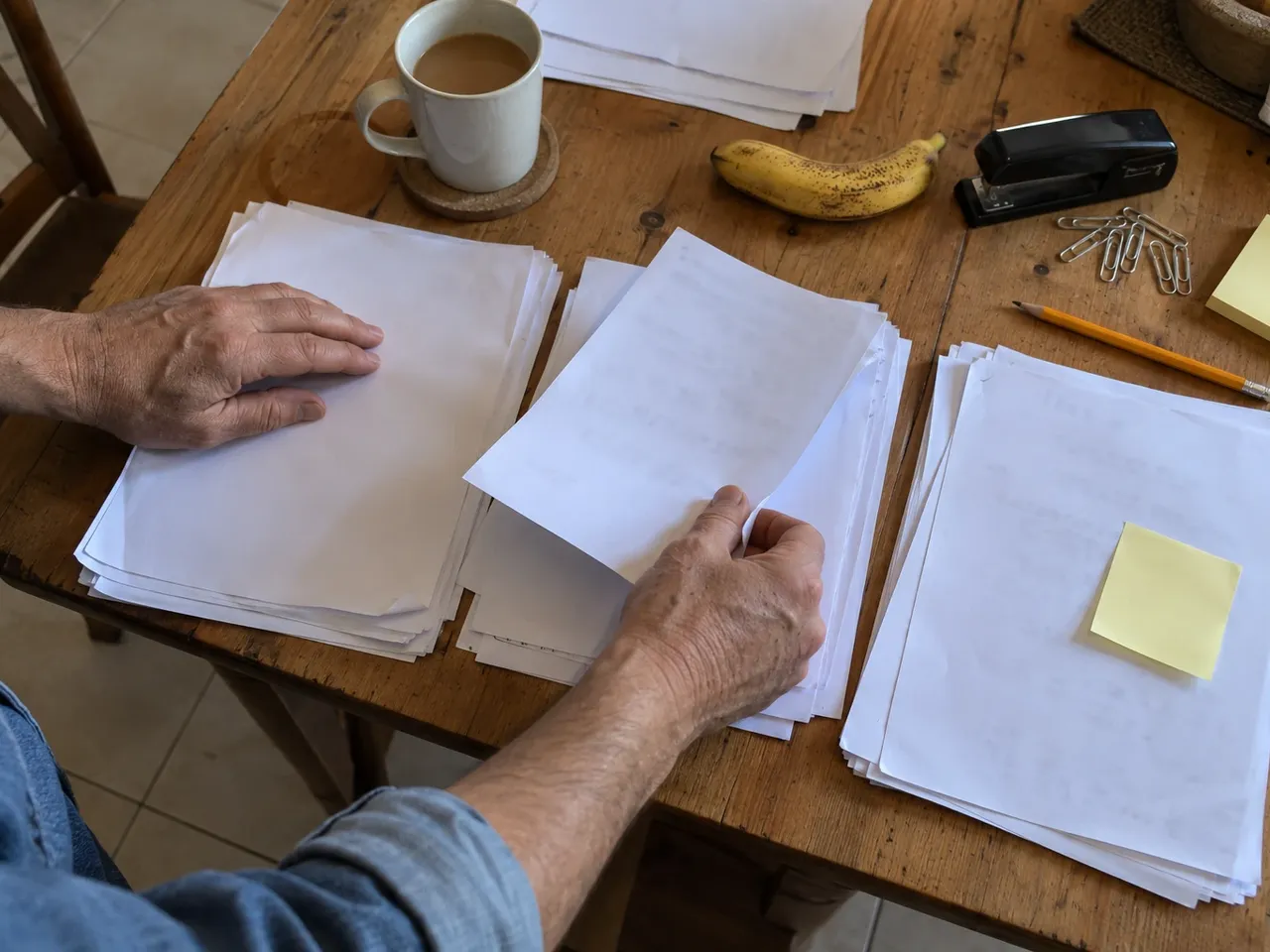
Hands sorting stacks of papers on a kitchen table

The executor's job, in five lines

British Columbia calls the court's document a representation grant: a grant of probate where there is a will, a grant of administration where there is not. The job comes down to five things.

  • See the death registered, and find the will.
  • Search for a wills notice, and work out what the person owned and owed.
  • Give notice, then ask the court for a representation grant, if the estate needs one.
  • File the tax returns, and ask the Canada Revenue Agency for clearance.
  • Share out what is left, and keep the records.

Part one

The first days

Very little has to be decided in the first days. The death is registered, the funeral is arranged, and the home and the papers are kept safe.

See the death registered, and collect proof

Who
The family, with the funeral director. The executor orders the certificates.
When
In the first days

Banks, insurers and pension offices will each ask for proof of the death, so order death certificates early.

Who can order a death certificate

British Columbia's page answers the question in three words: “Any person can” apply for a death certificate.

So the executor does not have to be the one who orders. A family member can.

What it costs

British Columbia's price list shows $27 for a death certificate.

The list gives more than one price. Check which one applies to the way you order.

  • Ask the funeral director how the death is being registered, and what they need from you.
  • Have the person's full legal name, date of birth and home address to hand.
  • Check the spelling of every name before any form goes in.
  • List every organization that will want proof: banks, insurers, pension offices, the court.
  • Ask each one what proof it accepts, and whether it wants an original.
  • Order death certificates from the British Columbia government.
  • Ask each organization to send its copy back once it has seen it.
  • Keep a tally of where each copy has gone.
  • Keep one copy that never leaves the file.
  • Start a notebook or a file: every call, every date, every name.

Official source

The funeral

Who
The family, with the funeral director
When
In the first days

The funeral is the family's first job, and the estate file starts with its paperwork.

What to look for first

The person may have written down what they wanted, or paid for some of it already.

Look before you agree to anything.

  • Look for written funeral wishes: in the will, in a letter, or with a funeral home.
  • Look for a prepaid funeral contract or a cemetery plot deed.
  • Ask for a written, itemized price before you agree to anything.
  • Keep the funeral invoice and the receipt in the estate file.
  • Note who paid the funeral bill, and from which account.
  • Tell close family and friends the date and place.

Make the home, the car and the property safe

Who
The executor, or the nearest family member until one is known
When
In the first days

Nothing needs to be sold or given away yet. For now the job is to keep things safe and to know what is there.

Why nothing moves yet

Until the will is found and read, nobody knows who is entitled to what.

A dated list and a set of photographs protect the executor as much as the estate.

  • Lock the home, and find out who else holds a key.
  • Tell the home insurer that the home is empty, and ask what the policy needs.
  • Find a home for any pets.
  • Empty the fridge, and turn off what does not need to be on.
  • Collect the mail, and ask Canada Post about forwarding it.
  • Move cash, jewellery and important papers somewhere secure, and list what you moved.
  • Take dated photographs of each room and of anything valuable.
  • Park the car somewhere safe, and tell the car insurer nobody is driving it.
  • Gather the cards in the wallet, and ask each issuer what it wants done with its card.
  • Leave everything else where it is until you know who is entitled to it.

Find the will

Who
The family, then the person the will names
When
In the first week or two

The will names the executor, so finding the original comes before almost everything else.

What a valid will looks like

The Wills, Estates and Succession Act says that to be valid a will must be in writing, signed at its end by the will-maker in front of two or more witnesses who are present at the same time, and signed by two or more of those witnesses.

A person who is 16 years of age or older and mentally capable may make a will, so a will made by a young adult counts.

A handwritten or unwitnessed paper

British Columbia has no separate rule for a will written by hand with no witness. The Act's line is: “A will that does not comply with subsection (1) is invalid”, unless the court orders it to be effective.

The court can do that. The Act says the court may make an order under subsection (3) if it decides that a document, a record, or a marking on a will sets out what the person intended.

That is the court's decision, not the family's. Keep every such paper and show it to a lawyer.

  • Look in the desk, the filing cabinet, a home safe and a safety deposit box.
  • Ask the person's lawyer, notary, accountant and bank whether they hold a will.
  • Look for the original, not only a copy.
  • Keep handwritten notes and letters that say who should have what.
  • Look for any later paper that changes the will.
  • Do not write on the will, and do not take out its staples.
  • Read who is named as executor, and who is named as a back-up.
  • Make copies for working use, and store the original somewhere safe.
  • Write down where the will was found, by whom, and on what date.

Official source

If there is no will

Who
A spouse or close relative, usually
When
Once the search and the wills notice result show no will

With no will, nobody has been named, so someone has to ask the court for a grant of administration.

The grant has a different name

A representation grant covers both cases. With a will it is a grant of probate. Without one it is a grant of administration.

The court's rules set out who may apply. This page does not state that order. The court registry or a lawyer can.

Who counts as a spouse

Under the Wills, Estates and Succession Act, two people are spouses of each other if they were married to each other, or had lived with each other in a marriage-like relationship for at least two years.

So a partner who was never married may be a spouse for the estate. The section further down this page, on what is different in British Columbia, says more.

Applying is not inheriting

The right to apply and the right to a share are two different things.

The shares of an estate with no will are set by the Act. The last step on this page sets out what it says for a spouse and descendants.

  • Search properly before you decide there is no will.
  • Wait for the wills notice search result before you settle the question.
  • Write down where you looked and who you asked.
  • Work out who is closest: a spouse, adult children, other relatives.
  • Note how long any unmarried partner had lived with the person, with dates.
  • Agree within the family who will apply.
  • Draw a plain family tree: spouse, children, grandchildren, parents, brothers and sisters.
  • Note any marriage, separation or divorce, with dates.

Official source

Part two

The grant and the probate fee

Probate is the court confirming who may act for the estate. Not every estate needs it. Where it is needed, British Columbia asks for notice first, and charges a fee on the estate's value.

Work out whether a grant is needed

Who
The executor
When
Before you fill in any court form

Whether an estate needs a representation grant depends on what the person owned and on what each holder asks to see.

The name for it

The Wills, Estates and Succession Act uses one name for the court's document: a representation grant.

Where there is a will, that is a grant of probate. Bank staff and older papers often say probate for both.

Ask, do not assume

Each bank, insurer and land office decides what it needs before it releases what it holds.

Get each answer in writing. This page does not state a rule for when a grant is required.

  • List every bank, insurer, pension office and land holding the person had.
  • Ask each one, in writing, whether it needs a representation grant to release what it holds.
  • Note whether the person owned a house, a condominium or land in their own name.
  • Note which accounts and property were held jointly with someone else.
  • Keep each organization's answer in the file.
  • If any of them needs a grant, plan to apply.
  • If none does, write down why you did not apply, and keep the letters.

Official source

List and value the estate

Who
The executor
When
Before the notice and the application

The value of the estate decides whether a probate fee is due, and how much.

The line to know

The Probate Fee Act says no fee is payable if the value of the estate does not exceed $25,000.

Above that line the fee rises with the value. The probate fee step, further down, gives the rate.

What counts

The Act has its own rules for what goes into the value. This page does not sum them up.

Read the Act, or ask the court registry, before you add anything up.

  • List every bank account, with the branch and the account number.
  • Ask each bank for a letter showing the balance on the date of death.
  • List investments, and ask each firm for a statement to the date of death.
  • List the home and any other land, and how each is owned.
  • List vehicles, with the make, the year and the plate.
  • List valuables: jewellery, art, collections, tools.
  • List life insurance and pensions, and who each one names to receive it.
  • List what was owed: the mortgage, loans, credit cards, bills.
  • Mark each item as held alone or held jointly.
  • Keep the paper behind every figure.
  • Total the list twice, and date it.

Official source

  • Probate Fee Act · King's Printer for British Columbia (BC Laws), read November 12, 2026

Give notice before you apply

Who
The executor, or the person who will apply
When
Before the application is filed

In British Columbia the people the court rules name must be told before the application goes in, and then there is a wait.

The rule

The Wills, Estates and Succession Act says an applicant for a grant of probate or administration must give notice of the proposed application to the persons referred to in the Supreme Court Civil Rules.

The Rules list those persons. Read the list against your own family and the will. This page does not repeat it.

The form

The notice is a notice of proposed application in relation to estate, in Form P1.

Where there is a will, a copy of the will goes with it.

The wait

The Rules say an estate grant may issue on any date that is at least 21 days after the date on which the notice is delivered, or on any earlier date ordered by the court.

So the date each notice was delivered matters. Write each one down.

  • Read the Supreme Court Civil Rules for who must be given notice.
  • List each of those people, with a current address.
  • Download Form P1 from the court's official forms list.
  • Fill in the notice from the will and your family list.
  • Make a copy of the will for each person, where there is a will.
  • Read the Rules for how the notice may be delivered.
  • Deliver the notice and the copy of the will to each person.
  • Write down the date each one was delivered, and how.
  • Keep proof of each delivery.
  • Count the wait from the last delivery, not the first.
  • Keep a copy of every notice in the estate file.

Official source

The application for the grant

Who
The executor, or the person applying where there is no will
When
Once notice has been given and the estate is listed and valued

The application is a set of court forms, and the wills notice search result goes in with it.

The forms

The court's official forms list names the notice as Form P1 and the form that follows it as “Submission for estate grant P2”.

The list holds the other probate forms too. Which ones you need depends on the estate. This page does not choose them for you.

The wills notice search result

The executor must include the results of an Application for Search of Wills Notice with the application for probate.

When the grant can issue

The Rules say an estate grant may issue on any date that is at least 21 days after the date on which the notice is delivered, or on any earlier date ordered by the court.

That is the earliest date. This page does not say how long the court registry takes.

  • Open the court's official probate forms list, and read which forms fit your case.
  • Check that each form you download is the current one on that list.
  • Fill in the forms from your dated list of the estate.
  • Put the wills notice search result with the application.
  • Put the original will with the application, where there is one.
  • Ask the court registry how forms that are sworn must be signed, and in front of whom.
  • Take photo identification when you go to sign.
  • Ask the court registry what it charges to file, and how it is paid.
  • Keep a full copy of everything you file.
  • Note the date you filed.
  • When the grant arrives, check every name on it.
  • Ask how to order extra court-certified copies for the banks.

Official source

The probate fee

Who
The executor
When
Before the grant is issued

British Columbia charges a probate fee on the value of the estate, on top of the court's own filing fees.

No fee at or below the line

The Probate Fee Act says no fee is payable if the value of the estate does not exceed $25,000.

The rate above it

Above that line the Act charges in two bands. The higher band is $14 for every $1 000, or part of it.

The lower band has a smaller rate, and the Act says where each band starts. This page prints only the higher rate, so work out your figure from the Act itself.

Court fees as well

In addition to any fees payable under the Supreme Court Civil Rules to start the proceeding, the Act says, the probate fee must be paid to the government.

So there are two charges: the court's filing fees and the probate fee. This page does not state the filing fees.

  • Take the value from your dated list of the estate.
  • Read the Probate Fee Act for what the value includes.
  • Check whether the value is above the no-fee line.
  • Work out the fee from the two bands in the Act.
  • Ask the court registry to confirm the figure before you pay.
  • Ask the court registry for its filing fees.
  • Find out whether the bank will release money from the estate to pay the fee.
  • Keep the receipt for the fee in the estate file.

Official source

  • Probate Fee Act · King's Printer for British Columbia (BC Laws), read November 12, 2026

Know the wills variation window

Who
The executor
When
From the day the grant is issued

After the grant, a spouse or child has a set time to ask the court to change what the will gives them.

The claim

The Wills, Estates and Succession Act covers a will that does not, in the court's opinion, make adequate provision for the proper maintenance and support of the will-maker's spouse or children.

In a proceeding by or on behalf of the spouse or children, the court may deal with it. That is a wills variation claim.

The time limit

The proceeding must be started within 180 days from the date the representation grant is issued in British Columbia.

The clock starts at the grant, not at the death.

Who is a spouse here

The Act's meaning of spouse applies: married, or living together in a marriage-like relationship for at least two years.

What it means for the executor

A claim can change who receives what.

Ask a British Columbia lawyer whether to wait for that time to pass before you share out the estate. This page does not state a rule on it.

  • Write the date the grant was issued at the front of the file.
  • Mark the end of the wills variation time in a calendar.
  • List the spouse and every child, whether or not the will names them.
  • Note any partner who lived with the person, and for how long.
  • Ask a British Columbia lawyer whether to hold the estate until the time has passed.
  • If court papers about the will arrive, take them to a lawyer at once.
  • Keep the estate's assets where they are while any claim is open.

Official source

What is different in British Columbia

Four things catch families out, often because a guide written for somewhere else says the opposite.

A partner who was not married can be a spouse

The Wills, Estates and Succession Act says two people are spouses of each other if they were married to each other, or had lived with each other in a marriage-like relationship for at least two years.

So where there is no will, a partner of that kind takes a spouse's share. The spouse's preferential share is $300,000 where all the descendants are descendants of both.

Federal benefits use their own test. For the CPP survivor's pension, a common-law partner is one who lived with the person for at least 1 year.

Official source

A handwritten will has no rule of its own

Some provinces accept a will written by hand with no witness. British Columbia's Act has no such route.

Its line is: “A will that does not comply with subsection (1) is invalid”, unless the court orders it to be effective as a will.

The court has that power. The Act says the court may make an order under subsection (3) if it decides the paper sets out what the person intended.

For an executor the lesson is practical. Do not throw a handwritten page away, and do not rely on it either. Show it to a lawyer.

Official source

The wills notice search is part of probate

British Columbia says that completing a search for a wills notice is a requirement of the wills probate process.

The executor must include the results of an Application for Search of Wills Notice with the application for probate.

The search finds a notice, not a will. Vital Statistics “does not keep a copy of your will”.

Official source

  • Wills Registry · Government of British Columbia (gov.bc.ca), read November 12, 2026

A spouse or child can ask the court to vary the will

The Act covers a will that does not, in the court's opinion, make adequate provision for the proper maintenance and support of the will-maker's spouse or children.

The proceeding must be started within 180 days from the date the representation grant is issued in British Columbia.

So a will is not always the last word. Ask a British Columbia lawyer before you share out an estate where a spouse or child has been left out or left little.

Official source

Part three

The months after

The rest is a run of letters, forms and waiting. Federal bodies come first because two of them have dates attached.

The CPP death benefit and the survivor's pension

Who
The executor applies for the death benefit. The surviving partner applies for the survivor's pension.
When
Apply within 60 days of the date of death

The Canada Pension Plan pays a death benefit for an eligible contributor, and the executor is the one asked to apply.

How much

Service Canada's page gives a basic amount and a possible top-up. The most it pays is $5,000.

The Canada Revenue Agency's own page still says up to $2,500. We follow Service Canada, which takes the application.

Who the top-up is for

The top-up is for a contributor who had never received a disability benefit, a post-retirement disability benefit or a retirement pension under the CPP or the Quebec Pension Plan.

The contributor must also leave no spouse or common-law partner who is eligible for a survivor's pension.

The survivor's pension

The CPP survivor's pension is a monthly payment paid to the legal spouse or common-law partner of the contributor who died.

For the CPP, a common-law partner is a person who lived with the contributor in a conjugal relationship for at least 1 year. That is the federal test, and it is shorter than British Columbia's own test for a spouse.

  • Find the person's Social Insurance Number.
  • Find out whether the person paid into the Canada Pension Plan.
  • Apply for the death benefit within 60 days of the date of death.
  • Send the proof of death that Service Canada asks for.
  • Note the date Service Canada received the application.
  • Allow about six to 12 weeks from that date for the payment.
  • Tell the surviving spouse or common-law partner about the survivor's pension.
  • Keep the benefit letter with the estate's tax papers.

Official source

Cancel CPP and Old Age Security

Who
The executor, or a family member
When
As soon as you can

CPP and Old Age Security have to be cancelled, and anything paid after the month of the death has to go back.

Cancel, and repay

The federal page says that if the person received CPP or Old Age Security benefits, these will need to be cancelled as soon as possible.

Benefits are payable for the month in which the death occurs; benefits received after that will have to be repaid.

The Social Insurance Number

If the death occurred in a Canadian province, the provincial vital statistics agency will automatically notify the SIN program. The federal page says you do not need to do anything more.

That automatic notice is about the SIN. Cancelling CPP and Old Age Security is still a separate step.

  • Check the bank statements for CPP and Old Age Security deposits.
  • Tell Service Canada about the death, and ask for both to be cancelled.
  • Write down the date you told them and who you spoke to.
  • Leave any payment that arrives after the month of the death untouched.
  • Ask Service Canada how it wants a later payment returned.
  • Keep the account that receives the payments open until the repayment is settled.
  • Keep the person's SIN card or letter safe in the file.

Official source

The passport and the credit bureaus

Who
The executor
When
In the first month or two

Two short jobs close the door on most misuse of a person's name: returning the passport and telling the credit bureaus.

The passport

If the person had a passport and it is still valid, the federal page says you should mail it to Passport Program Gatineau QC K1A 0G3, Canada.

The same page says what to send with it.

The credit bureaus

The federal page says to contact the two credit reporting agencies in Canada to notify them of the death: Equifax and TransUnion.

  • Find the passport, and check whether it is still valid.
  • Read the federal page for what goes in the envelope with it.
  • Photocopy the passport before you mail it.
  • Mail a valid passport to the Passport Program address, and keep proof of mailing.
  • Tell Equifax about the death.
  • Tell TransUnion about the death.
  • Ask each bureau for a copy of the person's credit file.
  • Compare the credit file with your list of accounts and debts.
  • Add anything new the credit file shows to your list.

Official source

Banks and joint accounts

Who
The executor
When
From the first weeks, and again once you hold a grant

Each bank has its own process, and a joint account may not stay open to the survivor straight away.

Joint accounts

The Financial Consumer Agency of Canada says that in some provinces and territories, banks may temporarily restrict access to some or all funds.

Ask the bank early, so that nobody is relying on money they cannot reach.

Accounts in one name

Each bank decides what it needs to see before it releases an account held in one name.

Get its answer in writing.

  • Tell each bank about the death, with proof of death.
  • Ask each bank what it needs before it will release what it holds.
  • Ask about every joint account, and whether the survivor can still use it.
  • Ask for a list of regular payments in and out of each account.
  • Cancel payments that are no longer needed, one at a time.
  • Ask whether the bank will pay the funeral bill and the probate fee from the account.
  • Ask about a safety deposit box, and what the bank needs to open it.
  • Hand in bank cards and unused cheques when the bank asks for them.
  • Keep every statement from the date of death onward.

Official source

Powers of attorney and representation agreements

Who
Anyone who was acting for the person under one
When
From the date of death

Neither an enduring power of attorney nor a representation agreement carries on after death.

An enduring power of attorney

An enduring power of attorney terminates if the adult who made it dies. That is the Power of Attorney Act.

The person named in a power of attorney is called an attorney. It does not mean a lawyer.

A representation agreement

The Representation Agreement Act has a list that opens “A representation agreement ends as follows”. The first line of that list is the death of the adult who made the agreement.

From then on

After the death, the executor is the one who acts for the estate.

The attorney's and the representative's records still matter. They show what was paid in and out while the person was alive.

  • Find any enduring power of attorney, and put it in the estate file.
  • Find any representation agreement, and put it in the file too.
  • If you were the attorney or the representative, stop using the document.
  • Tell each bank that knew of the power of attorney about the death.
  • Gather the records of what was paid in and out.
  • Hand those records to the executor.

Official source

The final tax return

Who
The executor, whom the Canada Revenue Agency calls the legal representative
When
For most deaths, by April 30 of the year following the death

The person's last tax return still has to be filed, and its due date depends on the month of the death.

When it is due

For a death from the start of January to the end of October, the final return is due April 30 of the year following the death.

For a death in November or December the date is later. The CRA's filing deadlines page gives it.

Rights or things

Some estates also file a separate return for what the CRA calls rights or things. Its page explains what those are.

That return has two possible due dates, and the later one applies. One year after the date of death is the first.

The second is counted from the notice of assessment for the final return.

  • Find the person's last few tax returns and notices of assessment.
  • Tell the Canada Revenue Agency about the death, and who is acting for the estate.
  • Gather the tax slips for the year of the death as they arrive.
  • Check whether any earlier year's return was never filed.
  • Work out the due date for the final return from the month of the death.
  • Read the CRA's page on rights or things, and decide whether a separate return applies.
  • File the final return, or have an accountant file it.
  • Keep the notice of assessment when it comes.
  • Pay any balance from the estate, and keep the receipt.

Official source

The clearance certificate

Who
The executor, as legal representative
When
After the returns have been assessed, and before you share out the estate

A clearance certificate is the Canada Revenue Agency confirming that the tax has been dealt with, and it protects the person who hands out the estate.

Why it matters

The CRA says that legal representatives who distribute assets without a clearance certificate are personally liable for unpaid amounts, up to the value of the assets distributed.

The order to follow

The form is TX19.

The CRA is plain about timing: “Do not submit your clearance certificate request at the same time” as you file the returns. Doing so delays their assessment.

The CRA sends an acknowledgement letter within 45 days of receiving the request.

  • Wait for the notices of assessment for every return you filed.
  • Pay anything those notices show as owing.
  • Fill in form TX19.
  • Read the CRA's list of what to send with the form, and gather it.
  • Send the request only after the returns have been assessed.
  • Note the date you sent it, and expect an acknowledgement within 45 days.
  • Hold back the estate's assets until the certificate arrives.
  • Keep the clearance certificate with the estate's permanent papers.

Official source

Share out, and keep the records

Who
The executor
When
After the clearance certificate, and with the wills variation time in mind

The last step is handing over what is left: by the will where there is one, and by the Wills, Estates and Succession Act where there is not.

With no will: a spouse and no descendants

Where a person dies without a will leaving a spouse but no surviving descendant, the Act says the estate must be distributed to the spouse.

Spouse has the Act's meaning: married, or living together in a marriage-like relationship for at least two years.

With no will: a spouse and descendants

Where all the descendants are descendants of both the person and the spouse, the Act sets the spouse's preferential share at $300,000, or a greater amount if one is prescribed.

Where they are not all descendants of both, the Act sets a different figure. This page does not state it.

After the preferential share, the Act says the residue of the intestate estate must be distributed one half to the spouse and one half to the descendants.

The records

Keep an account of everything that came in and everything that went out, with the paper behind each line.

The people who receive a share can then see how their figure was reached.

  • Read the will's gifts into a plain list: who, what, how much.
  • With no will, work out the shares from the Act, and have a lawyer check them.
  • Check the wills variation date in your calendar before anything is handed over.
  • Draw up an account: what came in, what was paid, what is left.
  • Show the account to everyone who is to receive a share.
  • Hand over each gift, and ask for a signed receipt.
  • Transfer the home, the car and investments with each holder's own forms.
  • Close the estate's bank account last, once everything has cleared.
  • Keep the will, the grant, the tax papers and the receipts together.
  • Tell the family where the estate file is kept.
  • Write a closing note in the file: what was done, and on what date.

Official source

The figures and the deadlines, with the date we read each one

Each row is taken from the official page it names. Nothing in this table is typed by hand.

The figures and the deadlines, with the date we read each one
WhatThe figure or ruleOfficial source
Death certificate$27From British Columbia's price list. The list gives more than one price, so check which applies to your order.Order certificates and copiesread November 12, 2026
Wills notice: to register, change or revoke one$17The will-maker's fee. The search an executor makes has its own fee on the same list.Order certificates and copiesread November 12, 2026
Wills notice searchis a requirement of the wills probate processBritish Columbia's wording about the search. The result goes in with the application for probate.Wills Registryread November 12, 2026
The wait after notice is givenat least 21 days after the date on which the notice is deliveredThe earliest date a grant may issue, unless the court orders an earlier one.Supreme Court Civil Rulesread November 12, 2026
Probate fee: no fee at or below$25 000No fee where the value of the estate does not exceed this amount.Probate Fee Actread November 12, 2026
Probate fee: the higher band$14 for every $1 000Or part of it. The Act has a lower band below this one, with a smaller rate.Probate Fee Actread November 12, 2026
Wills variation claim: the time limitwithin 180 daysCounted from the date the representation grant is issued in British Columbia.Wills, Estates and Succession Actread November 12, 2026
Spouse's preferential share, no will$300 000Where all the descendants are descendants of both the person and the spouse.Wills, Estates and Succession Actread November 12, 2026
Age to make a will16 years of age or olderAnd mentally capable of doing so, the Act says.Wills, Estates and Succession Actread November 12, 2026
CPP death benefit: the most it pays$5,000Service Canada's figure. The Canada Revenue Agency's page shows an older, lower one.Death Benefitread November 12, 2026
CPP death benefit: when to applywithin 60 days of the date of deathService Canada says the executor should apply in this time.Death Benefitread November 12, 2026
CPP death benefit: how long payment takessix to 12 weeksCounted from the date Service Canada receives the completed application.Death Benefitread November 12, 2026
CPP common-law partner: time lived togetherfor at least 1 yearThe federal test for the survivor's pension. British Columbia's test for a spouse is its own.Survivor's Pensionread November 12, 2026
Final tax returnApril 30 of the year following the deathFor a death before November. A death in November or December has a later date.Filing and payment due dates - Prepare tax returns for someone who diedread November 12, 2026
Rights or things returnOne year after the date of deathThe first of two possible dates. The later one applies.Filing and payment due dates - Prepare tax returns for someone who diedread November 12, 2026
Clearance certificate: the CRA's acknowledgementwithin 45 daysCounted from the day the CRA receives the request. It is an acknowledgement, not the certificate.Apply for a clearance certificateread November 12, 2026

Questions executors in British Columbia ask

What is probate called in British Columbia?

The Wills, Estates and Succession Act calls the court's document a representation grant. Where there is a will it is a grant of probate. Where there is no will it is a grant of administration.

Do I have to search for a wills notice?

Yes, if you are applying for probate. British Columbia says completing a search for a wills notice is a requirement of the wills probate process, and the results go in with the application.

Does the wills registry hold the will?

No. It holds a notice that a will was made and where the will-maker said it was kept. Vital Statistics “does not keep a copy of your will”.

Who has to be told before I apply?

The Act says an applicant must give notice of the proposed application to the persons referred to in the Supreme Court Civil Rules. The notice is Form P1, and a copy of the will goes with it where there is one.

How long do I wait after giving notice?

The Rules say an estate grant may issue on any date that is at least 21 days after the date on which the notice is delivered, or on any earlier date ordered by the court. That is the earliest date, not a promise of when the grant arrives.

How much is the probate fee in British Columbia?

Nothing where the value of the estate does not exceed $25,000. Above that the Probate Fee Act charges in two bands, and the higher one is $14 for every $1 000, or part of it. The court's own filing fees are charged as well.

Is a handwritten will valid in British Columbia?

Not on its own. The Act says a will must be in writing and signed in front of witnesses, and a will that does not comply is invalid unless the court orders it to be effective. Keep the paper and show it to a lawyer.

Does an unmarried partner inherit if there is no will?

A partner counts as a spouse under the Act if the two had lived with each other in a marriage-like relationship for at least two years. A spouse has a share of an estate with no will.

How long does someone have to challenge the will?

A wills variation claim by a spouse or child must be started within 180 days from the date the representation grant is issued in British Columbia. Other kinds of claim have their own rules, which this page does not cover.

How much is the CPP death benefit, and who applies?

Service Canada says the most it pays is $5,000: a basic amount and a possible top-up. The executor should apply within 60 days of the date of death. Payment takes about six to 12 weeks from the date Service Canada receives the completed application.

The official pages behind this checklist

Every fact on this page was read on the official page listed here, on the date shown beside it.

Official source